How Play-Based Learning Helps Children Develop Essential Skills at Preschool
The early years of a child’s life lay the foundation for future learning, behaviour, and overall development. During this stage, children learn best when they are actively engaged, curious, and enjoying the learning process. This is where play-based learning becomes one of the most effective approaches in early childhood education.
At Early Buds Preschool, every activity is thoughtfully designed to make learning enjoyable while helping children build confidence, creativity, communication, and problem-solving skills. As a trusted preschool in Bangalore, Early Buds Preschool believes that meaningful learning happens naturally when children explore, imagine, and interact through play.
Rather than focusing only on books and worksheets, children participate in hands-on experiences that support child development, emotional well-being, language growth, and social interaction. In this blog, let’s explore how play based learning helps children develop essential skills that prepare them for school and life.
What Is Play-Based Learning?
Play based learning is an educational approach where children learn through enjoyable, hands-on experiences instead of memorising information. Whether they are building blocks, solving puzzles, role-playing, painting, singing, or exploring nature, every activity has a learning purpose.
In early education, play is much more than entertainment. It allows children to ask questions, make decisions, solve problems, and develop new ideas naturally. Children participating in learning through play are often more curious, engaged, and motivated because learning feels exciting rather than forced.
Why Is Play-Based Learning Important for Child Development?
The first five years are critical for brain development. During this period, children absorb information rapidly, making quality early childhood education extremely important. Play-based learning supports multiple areas of child development at the same time.
It improves cognitive development
Children begin to recognise patterns, understand numbers, identify colours, compare objects, and think critically through fun preschool activities. Activities such as puzzles, sorting games, matching exercises, and storytelling improve memory and logical thinking.
It strengthens language and communication
Children naturally expand their vocabulary while talking to teachers and friends during play. Singing rhymes, listening to stories, and role-playing everyday situations encourage better communication and listening skills.
It develops emotional intelligence
Learning how to share toys, wait for turns, express feelings, and resolve disagreements teaches children emotional control and empathy. These lessons become valuable throughout their lives.
It builds physical skills
Running, jumping, climbing, dancing, drawing, and cutting with child-safe scissors strengthen both gross motor and fine motor skills. At a quality preschool, every playful activity contributes to overall development.
How Does Learning Through Play Build Essential Life Skills?
Children develop much more than academic knowledge during preschool years. They build life skills that help them become confident and independent learners.
Problem-solving
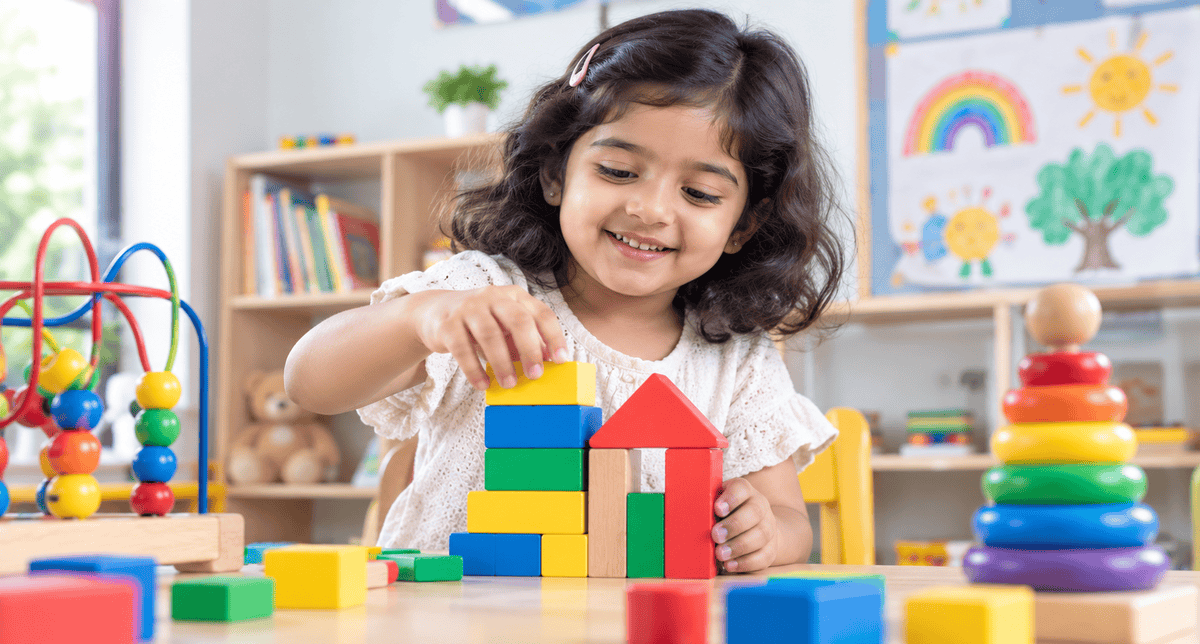
Whether completing a puzzle or constructing a tower with blocks, children learn to think differently and find solutions when things don’t work the first time.
Creativity
Art projects, pretend play, music, and imaginative games allow children to think creatively without fear of making mistakes.
Decision-making
Simple choices such as selecting colours, building materials, or deciding roles during pretend games improve independent thinking.
Teamwork
Group preschool activities teach children how to cooperate, communicate, and work towards common goals.
Confidence
Completing small challenges independently gives children a sense of achievement, encouraging them to try new experiences. These essential life skills continue benefiting children throughout school and adulthood.
How Do Preschool Activities Make Learning More Effective?
Children naturally enjoy activities that involve movement, creativity, and exploration. Well-designed preschool activities make lessons easier to understand because children experience concepts instead of simply hearing about them.
Some examples include:
- Storytelling sessions that improve language skills.
- Building blocks that encourage creativity and logical thinking.
- Sand and water play that develops sensory awareness.
- Art and craft activities that strengthen fine motor skills.
- Outdoor games that improve balance, coordination, and teamwork.
- Music and dance sessions that enhance memory and rhythm.
- Role-playing activities that develop imagination and communication.
Every activity contributes to child development while keeping children excited about learning.
Why Is Early Childhood Education More Than Academic Learning?
Many parents associate preschool with learning alphabets and numbers. While these are important, early childhood education focuses on the complete development of every child.
Children also learn how to:
- Build friendships
- Follow routines
- Listen carefully
- Express thoughts confidently
- Solve simple problems
- Become independent
- Respect others
- Adapt to new environments
This balanced approach prepares children for formal schooling with confidence.
How Does Play-Based Learning Prepare Children for School?
One of the biggest advantages of play based learning is that children develop a positive attitude toward education from an early age. Instead of feeling pressured, they associate learning with curiosity and enjoyment.
By the time children move to primary school, they usually demonstrate:
- Better concentration
- Improved communication skills
- Stronger social interactions
- Greater confidence
- Better emotional regulation
- Enhanced creativity
- Improved problem-solving abilities
These qualities often make the transition from nursery school to primary education much smoother.
How Does Play-Based Learning Encourage Social Skills?
Social interaction is an important part of every child’s development. During group activities, children naturally learn how to:
- Share resources
- Take turns
- Respect different opinions
- Cooperate with classmates
- Resolve conflicts peacefully
- Build meaningful friendships
These experiences help children become emotionally secure and socially confident. Teachers guide children gently while allowing them to develop these skills independently through everyday interactions.
Why Should Parents Choose a Preschool That Focuses on Learning Through Play?
Choosing the right preschool in Bangalore means looking beyond colourful classrooms and attractive facilities. Parents should consider whether the learning environment supports curiosity, creativity, independence, and emotional growth.
A quality preschool that follows learning through play helps children:
- Enjoy coming to school every day.
- Learn naturally through exploration.
- Develop confidence without unnecessary pressure.
- Build strong communication skills.
- Become independent learners.
- Develop positive relationships with teachers and peers.
These experiences create a lifelong love for learning.
How Does Early Buds Preschool Support Play-Based Learning?
At Early Buds Preschool, children experience an engaging environment where education and play go hand in hand. Every classroom is thoughtfully planned to encourage curiosity, creativity, and exploration. Experienced educators understand that each child learns differently, so activities are adapted to suit individual learning styles while promoting overall child development.
The curriculum includes storytelling, music, art, sensory exploration, outdoor play, language development, creative projects, and interactive learning experiences that support both academic readiness and personal growth. As a trusted preschool in Bangalore, Early Buds Preschool focuses on helping every child become confident, independent, and enthusiastic about learning.
What Can Parents Do at Home to Support Play-Based Learning?
Learning does not stop when children leave school. Parents play an equally important role in encouraging development at home.
Simple activities can make a big difference:
- Read storybooks together every day.
- Encourage pretend play using everyday objects.
- Allow children to draw and paint freely.
- Build puzzles together.
- Spend time outdoors exploring nature.
- Let children ask questions and discover answers.
- Celebrate effort instead of perfection.
These activities reinforce what children learn at preschool while strengthening family bonds.
Conclusion
The best learning experiences happen when children feel happy, curious, and confident. Play based learning gives children the opportunity to explore the world around them while building essential life skills that support future academic and personal success. From communication and creativity to teamwork and problem-solving, every playful experience contributes to healthy child development. High-quality early childhood education focuses on nurturing the whole child, helping them grow intellectually, emotionally, socially, and physically.
Early Buds Preschool is committed to creating an environment where children learn through discovery, imagination, and meaningful experiences. As a trusted preschool in Bangalore, the school provides a nurturing space where every child can build confidence, develop essential skills, and enjoy a joyful start to lifelong learning.
Frequently Asked Questions
What is play-based learning in preschool?
Play-based learning is an educational approach where children learn academic, social, emotional, and physical skills through enjoyable and meaningful activities rather than traditional classroom instruction.
Why is play-based learning important for child development?
It supports cognitive growth, communication, creativity, emotional intelligence, social interaction, and problem-solving, making it one of the most effective methods of early childhood education.
What skills do children develop through play?
Children develop communication, creativity, teamwork, confidence, decision-making, critical thinking, fine motor skills, gross motor skills, and emotional regulation.
How do preschool activities improve learning?
Well-designed preschool activities encourage children to explore, experiment, ask questions, and learn through practical experiences, making learning enjoyable and memorable.
Why should parents choose Early Buds Preschool in Bangalore?
Early Buds Preschool offers a nurturing, child-friendly environment that combines learning through play, experienced educators, engaging activities, and holistic child development, helping children build a strong foundation for future success.