Preschool Near Me: How to Choose the Best Preschool Guide
Choosing the right preschool is one of the most important decisions parents make during their child’s early years. A preschool is much more than a place where children spend a few hours each day, it is the foundation of their learning journey, social development, and emotional well-being. As education continues to evolve in 2026, parents are looking for schools that offer a safe, engaging, and nurturing environment while preparing children for future academic success.
At Early Buds Preschool, the focus is on creating meaningful learning experiences that help children grow with confidence, curiosity, and creativity. A well-planned learning environment, caring educators, and a child-centric approach can make a lasting difference in a child’s development.
If you are searching for the best preschool near me, this guide will help you understand the key factors every parent should consider before making the final decision.
Why Is Preschool Important for Early Childhood Education?
The first five years of a child’s life are often called the most important years of development. During this period, children develop language, communication, social skills, creativity, and emotional intelligence. A quality early childhood education program introduces children to structured learning while allowing them to explore through play and activities. Rather than focusing only on academics, a good preschool nurtures curiosity, confidence, and independence.
Research consistently shows that children who attend quality preschool programs often adapt better to primary school, communicate effectively, and develop stronger problem solving abilities.
What Makes the Best Preschool in 2026?
Parents today expect much more than colourful classrooms and toys. The best preschool combines modern teaching methods with emotional support, creativity, and safety.
When evaluating a preschool, look for schools that provide:
- Qualified and caring teachers
- Age-appropriate learning activities
- Safe classrooms and play areas
- Small teacher-child ratios
- Activity-based learning
- Regular parent communication
- Focus on overall child development
These elements work together to create a positive learning environment where children enjoy coming to school every day.
Why Does the Preschool Curriculum Matter?
One of the first things parents should ask about is the preschool curriculum. The curriculum determines how children learn, interact, and develop different skills. A modern curriculum should balance structured lessons with hands-on experiences. Children learn best when they participate in storytelling, music, art, puzzles, role play, outdoor activities, and sensory exploration.
Instead of memorization, the curriculum should encourage children to:
- Think independently
- Ask questions
- Solve simple problems
- Express themselves confidently
- Build creativity
- Develop communication skills
An engaging curriculum makes learning enjoyable while preparing children for future academic success.
How Important Is Early Learning During Preschool?
Early learning plays a significant role in shaping a child’s future. Every classroom activity contributes to cognitive, physical, emotional, and social development. Simple activities like building blocks, singing rhymes, painting, and group games improve concentration, imagination, and teamwork.
A preschool that encourages exploration rather than pressure allows children to develop naturally at their own pace. Parents should look for programs that balance academics with fun, ensuring children enjoy learning instead of feeling stressed.
What Should Parents Look for in Early Childhood Programs?
Quality early childhood programs go beyond classroom teaching. A good preschool supports every area of child development, including:
Physical Development
Children need opportunities to run, jump, climb, balance, and improve their motor skills through indoor and outdoor activities.
Cognitive Development
Problem-solving games, storytelling, puzzles, and interactive learning improve thinking and memory.
Social Development
Group activities teach sharing, cooperation, empathy, and teamwork.
Emotional Development
Teachers help children understand emotions, develop confidence, and become independent learners.
A balanced approach ensures children are prepared for both school and everyday life.
Is Safety Still the Top Priority for Parents?
Absolutely. Parents naturally want their children to feel safe throughout the day. Safety should never be compromised while selecting a preschool.
Look for schools that provide:
- CCTV surveillance
- Secure campus
- Verified staff members
- Child-friendly classrooms
- Emergency preparedness
- Hygiene standards
- Clean drinking water
- Safe playground equipment
A secure environment allows children to explore confidently while giving parents peace of mind.
Should You Choose a Preschool with Daycare?
Many working parents today prefer a preschool with daycare because it offers convenience and continuity throughout the day. However, daycare should be much more than supervision.
An ideal daycare includes:
- Structured play activities
- Nutritious meals
- Quiet nap areas
- Reading time
- Creative activities
- Caring staff
- Continuous monitoring
Children benefit from spending their day in a familiar environment with trusted teachers and caregivers.
How Can Parents Identify Caring and Qualified Teachers?
Teachers influence every child’s preschool experience. Experienced educators understand that every child learns differently. Instead of comparing children, they encourage individual growth and celebrate small achievements.
When visiting a preschool, observe whether teachers:
- Speak kindly with children
- Encourage participation
- Listen patiently
- Handle conflicts calmly
- Motivate shy children
- Build positive relationships
Warm and supportive teachers create classrooms where children feel happy, safe, and motivated to learn.
Does Classroom Environment Affect Learning?
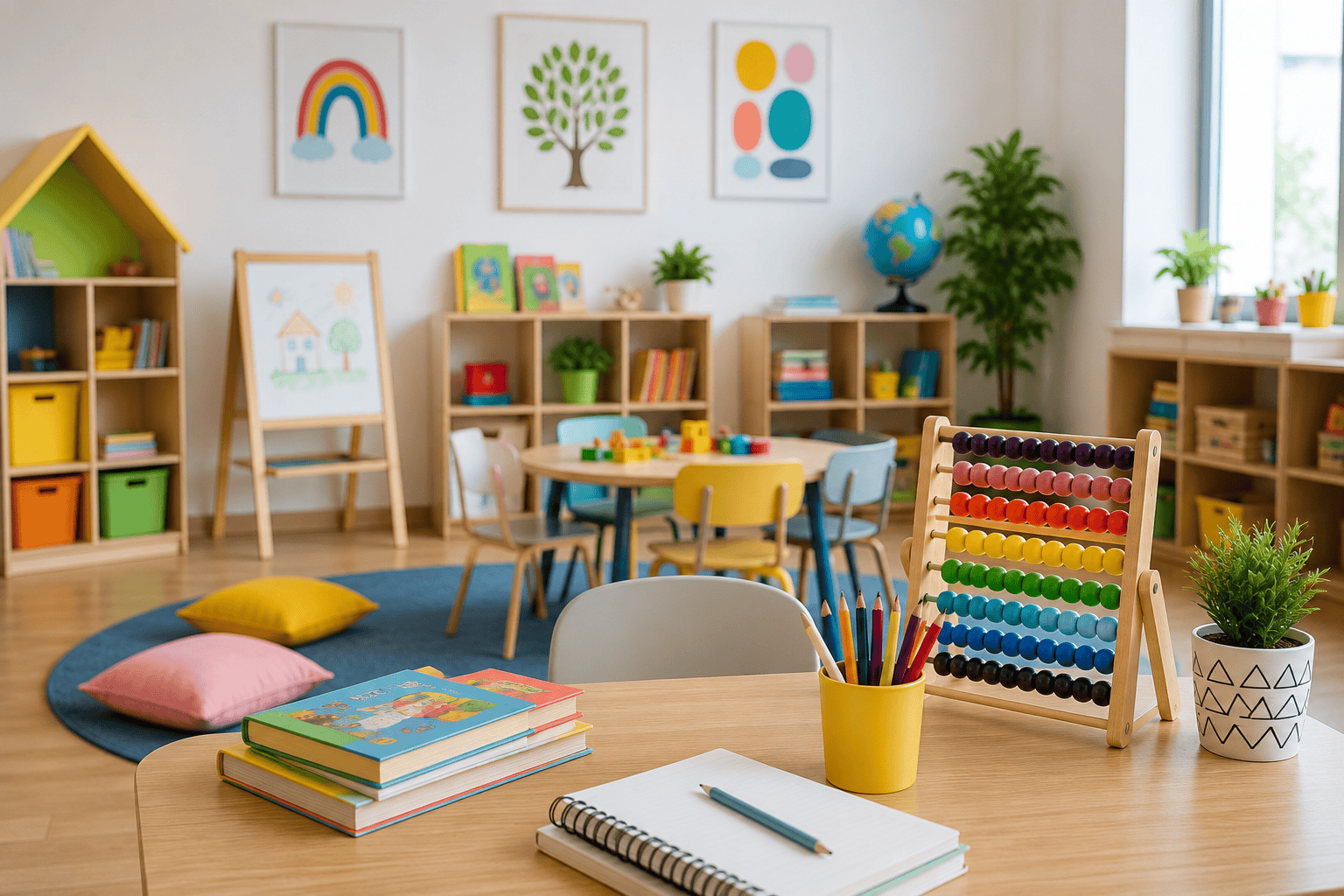
Yes, it does. Children spend several hours every day inside the classroom, making the environment an important part of their development.
A good preschool classroom should be:
- Bright and spacious
- Colourful without being distracting
- Organized
- Clean
- Safe
- Filled with age-appropriate learning materials
Learning corners for books, art, pretend play, puzzles, and sensory activities encourage curiosity and independent exploration.
Why Are Play-Based Activities So Effective?
Children naturally learn through play. Play-based learning encourages imagination while developing communication, motor, and social skills.
Activities may include:
- Storytelling
- Building blocks
- Music and dance
- Art and craft
- Role-playing
- Outdoor games
- Science experiments
- Nature exploration
These activities make learning enjoyable while strengthening problem-solving abilities.
How Important Is Parent-School Communication?
The best learning happens when schools and parents work together.
Good preschools regularly communicate children’s progress through:
- Parent-teacher meetings
- Daily updates
- Progress reports
- Activity photographs
- Learning journals
- School events
Open communication builds trust and helps parents actively participate in their child’s development.
What Questions Should Parents Ask Before Preschool Admission?
Before finalising admission, parents should ask a few important questions.
Some useful questions include:
- What teaching approach does the preschool follow?
- What is the teacher-child ratio?
- Is the curriculum activity-based?
- How are children’s progress evaluated?
- Are outdoor activities conducted daily?
- Is daycare available?
- What safety measures are implemented?
- How does the school communicate with parents?
- Are meals provided?
- How are emergencies handled?
These questions help parents make informed decisions rather than choosing solely based on location or fees.
Should Location Be the Only Factor?
Many parents begin their search by typing best preschool near me into Google. While choosing a nearby preschool certainly makes daily travel easier, convenience alone should not determine your decision.
Instead, consider:
- Teaching quality
- Safety standards
- Learning environment
- Curriculum
- Teacher experience
- Parent reviews
- Child engagement
- Facilities
The right preschool offers long-term benefits that extend far beyond proximity.
How Can Parents Know if Their Child Is Happy?
A happy child often provides the biggest clue that the preschool is the right choice.
Positive signs include:
- Excitement about going to school
- Talking about teachers and friends
- Sharing new stories
- Increased confidence
- Better communication
- Curiosity about learning
- Improved social interaction
Children who enjoy preschool usually become enthusiastic learners for life.
Why Is Holistic Childhood Education Becoming More Important?
Modern childhood education focuses on developing the whole child rather than academic excellence alone.
Holistic education nurtures:
- Creativity
- Emotional intelligence
- Confidence
- Critical thinking
- Collaboration
- Leadership
- Independence
- Communication skills
These qualities help children succeed both inside and outside the classroom.
Final Thoughts
Choosing the right preschool in 2026 requires careful consideration of several factors, including the curriculum, teacher quality, safety, learning environment, and opportunities for early learning and early childhood education. Every child deserves a preschool that encourages curiosity, supports emotional growth, and makes learning enjoyable.
At Early Buds Preschool, children are encouraged to learn through exploration, creativity, and meaningful experiences in a nurturing environment designed to support every stage of development. By focusing on holistic growth, caring educators, and child-centred learning, Early Buds Preschool helps build a strong foundation that prepares children for lifelong success.
When searching for the best preschool or the best preschool near me, remember that the right choice is one that supports not only academic readiness but also confidence, happiness, and overall development.
Frequently Asked Questions
What is the right age to join preschool?
Most children begin preschool between 2.5 and 4 years of age, depending on the school's admission policy and the child's readiness.
What should parents look for in a preschool?
Parents should consider the curriculum, teacher qualifications, safety measures, classroom environment, learning approach, parent communication, and extracurricular activities before selecting a preschool.
Why is early childhood education important?
Early childhood education helps children develop language, social, emotional, cognitive, and motor skills while preparing them for future academic learning.
Is a preschool with daycare a good option?
Yes. A preschool with daycare offers a structured and familiar environment where children can continue learning, playing, and resting under professional supervision.
How do I know if a preschool curriculum is good?
A quality preschool curriculum encourages play-based learning, creativity, problem-solving, communication, and age-appropriate activities rather than focusing only on academics.
How many children should be in one preschool classroom?
Smaller teacher-child ratios are generally recommended because they allow teachers to provide individual attention and better support each child's learning and development.